


Optical Materials for AR Waveguides and Extended Reality Displays
Experience the forefront of optical innovation for Extended Reality (XR) devices with Pixelligent’s breakthrough PixNIL® high-refractive-index (RI) formulations.

Reimagining How We Communicate and Entertain
With the Extended Reality (XR) market poised for remarkable growth, leading device manufacturers are racing to create immersive visual experiences that captivate users. Pixelligent’s PixNIL® formulations position your products at the forefront of XR innovation—delivering stunning clarity, expanded field-of-view, and unmatched brightness to shape the future of consumer engagement.
Explore Our ProductsUnderstanding Extended Reality
Extended reality (XR) is an umbrella term that includes immersive technologies such as augmented reality (AR) and mixed reality (MR). While each experience uses digital content differently, all rely on advanced optical systems and materials to deliver high-performance visual experiences.

Augmented Reality overlays digital images or information onto the real world, allowing users to see both physical surroundings and virtual content at the same time. AR systems often rely on waveguides, displays, and optical materials that can precisely control light in lightweight, transparent devices.

Mixed Reality blends digital content with the physical world in a more interactive way, allowing virtual objects to appear anchored in and responsive to real environments. MR devices require highly sophisticated optics and sensor systems to support accurate image placement, depth perception, and real-time interaction.
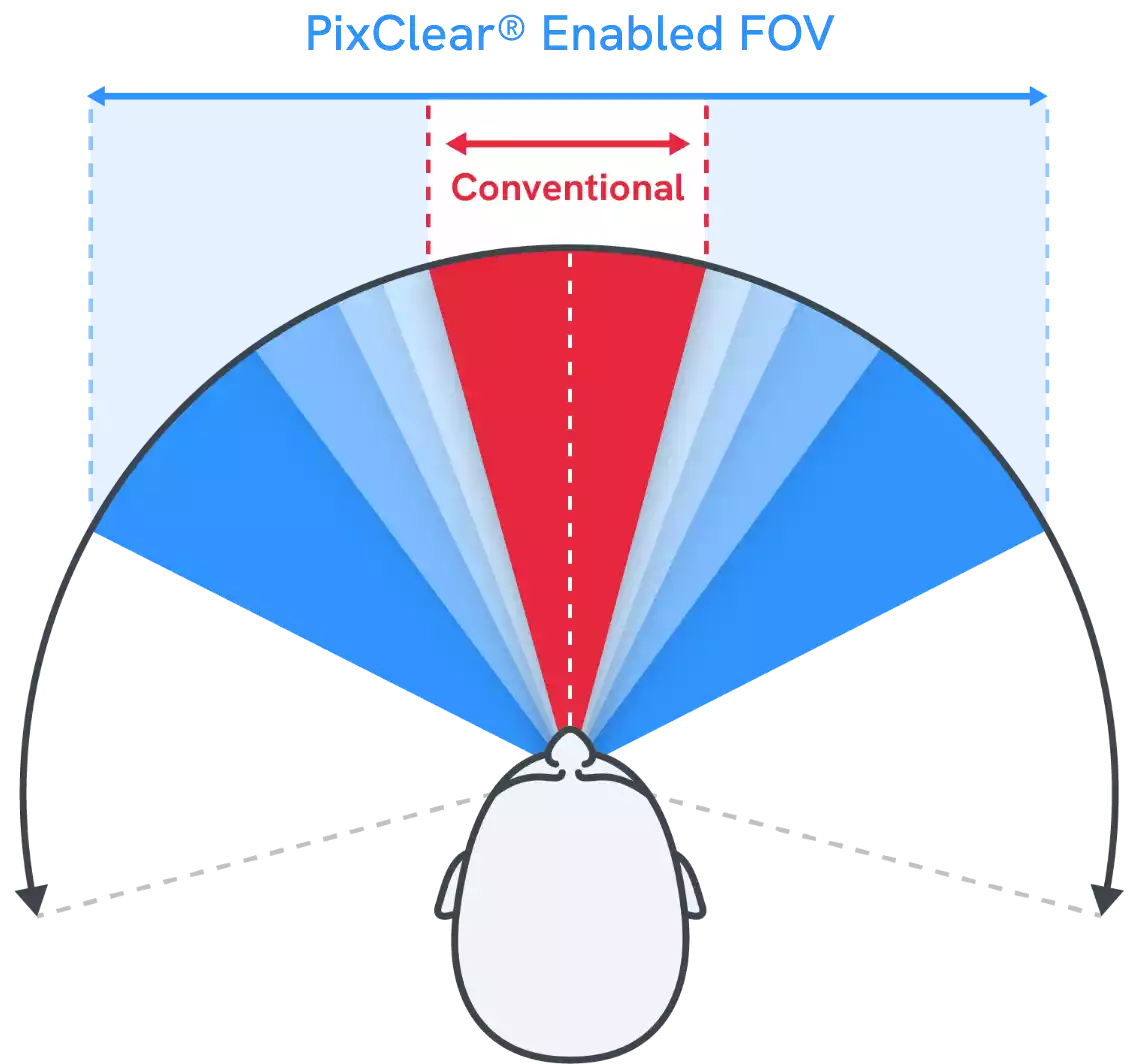
Enabling a Fully Immersive XR Experience
Pixelligent’s high-refractive-index (RI) PixNIL® formulations, with RIs ranging from 1.7 to 2.0, enable manufacturers to achieve the widest field-of-view (FoV) waveguides and the most robust mechanical properties available in the XR market. In XR devices, an expanded FoV allows users to experience a larger augmented environment that blends seamlessly with the real world, creating a more captivating and immersive experience.
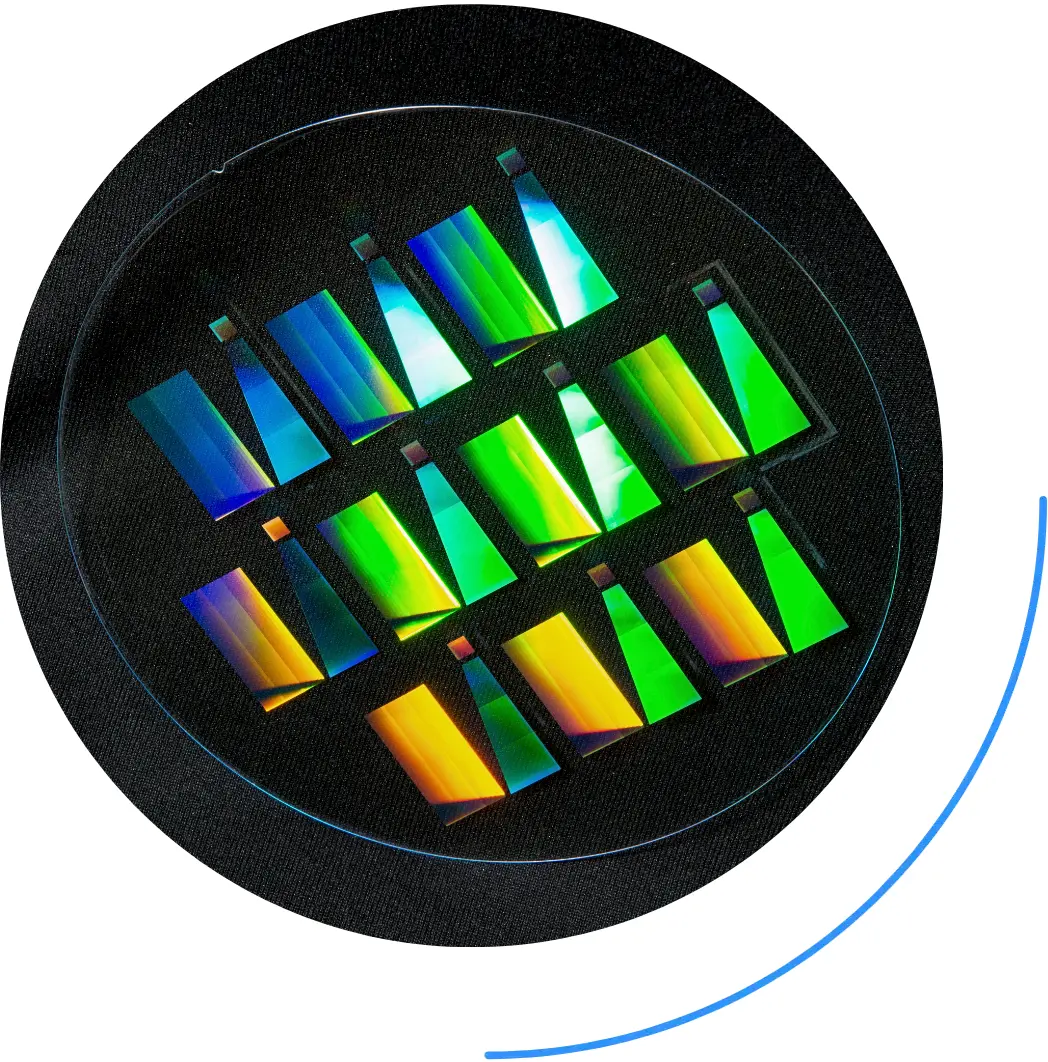
Waveguide Optics for Augmented Reality
Waveguide optics are central to modern augmented reality displays, guiding light through transparent substrates to deliver images directly to the user’s eye. Pixelligent’s high-refractive-index nanocrystal materials improve efficiency, brightness, and device miniaturization.
Enabling Waveguides with High RI MaterialsBenefits Beyond What You Can See
Enhance your XR device applications with Pixelligent formulations that deliver exceptional clarity, an expanded field-of-view (FoV), and superior optical performance. Our products empower more immersive experiences and set the standard for next-generation XR innovation.
High-RI Materials that Enhance XR Device Capabilities
Explore our PixCor®, PixNIL®, and PixClear® high-refractive-index (RI) product line, designed specifically for Extended Reality (XR).
- Film Thickness Range: 0.1-1.5 μm
- Refractive index: 1.8
- Haze: <0.1%
- Transparency: >90%
- Nanocrystal: 20nm particle size
- Solvent Type: PGMEA
- Dispensing Method: Spin Coat / Slot Die
- Curing Method: UV
- Film Thickness Range: 0.1-1.5 μm
- Refractive index: 1.8
- Haze: <0.1%
- Transparency: >90%
- Nanocrystal: 20nm particle size
- Solvent Type: PGMEA
- Dispensing Method: Spin Coat / Slot Die
- Curing Method: UV
- Nanocrystal: PixClear Titania 20nm
- Solvent Type: PGMEA
- Dispensing Method: Spin Coat
- Refractive index: 1.92
- Transparency: >99%
- Film Thickness Range: 0.1-1.5 µm
- Curing Method: UV
- Haze: <0.05%
- Nanocrystal: PixClear Zirconia 10nm
- Solvent Type: PGMEA
- Dispensing Method: Spin Coat / Slot Die
- Refractive index: 1.72
- Transparency: >95%
- Film Thickness Range: 0.1-1.5 µm
- Curing Method: UV
- Haze: <0.02%
- Nanocrystal Size: 10 nm, capped
- Capping: Non-functional
- Nanocrystal Base: Titania
- Compatibility: Compatible with polar solvents
- Custom formulations available upon request
- Nanocrystal Size: 20 nm, capped
- Capping: Functional
- Nanocrystal Base: Titania
- Compatibility: Compatible with polar solvents
- Larger nanocrystal provides the highest refractive index available on the market
- Custom formulations available upon request
- Solvent Type: PGMEA
- Nanocrystal Size: 10 nm, capped
- Capping: Functional or non-functional
- Nanocrystal Base: Zirconia
- Solvent Type: ETA
- Nanocrystal Size: 10 nm, capped
- Capping: Functional or non-functional
- Nanocrystal Base: Zirconia
XR Application Resources


Frequently Asked Questions
An optical waveguide is a structure that directs light along a defined path using differences in refractive index between materials. By confining light within a thin layer or channel, waveguides allow optical signals to travel efficiently with minimal loss.
Waveguides are a key optical component in many augmented reality devices. They guide light from a small projector through a thin transparent substrate and direct it toward the user’s eye. This enables AR systems to deliver digital images while keeping the display lightweight, compact, and see-through.
High-refractive-index materials help improve how efficiently light is guided and controlled within a waveguide. They can enhance brightness, reduce optical loss, and enable more compact optical designs. These properties are especially important for next-generation applications such as AR displays, advanced sensors, and photonic devices.